
The Psychology of Voice: Why Customers Prefer Talking to AI Agents
The surprising research behind customer acceptance of AI voice technology—and why voice is the most natural interface for human-computer interaction.
By Dr. Sarah Mitchell, UX Research
February 3, 2026
12 min read
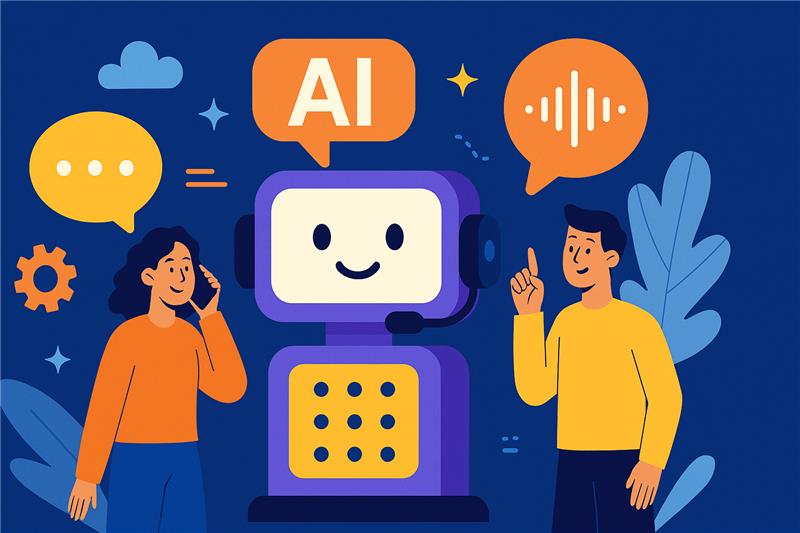
Voice is humanity’s most natural interface
“I don’t want to talk to a robot.” This is what every business executive fears when considering AI voice agents. But here’s what the data actually shows: when implemented well, customers not only accept AI voice agents—they often prefer them to human agents for certain interactions.
This isn’t about fooling people into thinking they’re talking to humans. It’s about understanding the fundamental psychology of why voice works as an interface, and why the human brain processes voice communication differently than text, forms, or visual interfaces.
I’ve spent five years researching voice interface psychology at Stanford’s Human-Computer Interaction Lab. This article synthesizes research from cognitive science, behavioral economics, and real-world deployment data to explain exactly why voice AI works—and when it doesn’t.
The Surprising Customer Acceptance Data
Let’s start with what customers actually think, not what we assume they think. According to Capgemini’s 2025 Conversational Interfaces study of 12,000 consumers across 9 countries:
The Key Insight
Customers don’t hate AI. They hate bad automation. When voice AI works well—fast, accurate, helpful—acceptance rates exceed 90%.
6 Psychological Factors That Make Voice Work
Drawing from cognitive psychology and behavioral science research, here’s why voice interfaces connect with our brains so effectively:
1. Voice is Our First Interface
Humans learn to speak around 12-18 months old, but don’t learn to read until age 5-7. According to American Psychological Association research, our brains are evolutionarily wired for spoken language processing in ways they’re not for text or visual symbols.
What This Means for UX:
Voice requires less cognitive effort than reading menus or filling out forms. Customers can multitask while speaking (driving, cooking, walking) but can’t while typing. This is why voice has 3x higher completion rates for simple tasks.
2. Speed of Thought vs. Speed of Typing
The average person speaks at 150-160 words per minute but types at only 40 words per minute. More importantly, we think in language at roughly the same speed we speak. Voice allows expression at the speed of thought.
Real-World Example:
Via Form: “Type your account number, select issue type from dropdown, describe problem in 500 characters…” (3-4 minutes)
Via Voice: “Hi, I need to reschedule my appointment for next Tuesday.” (5 seconds)
The cognitive load difference is enormous.
3. The Privacy Paradox
Counterintuitively, many people feel MORE comfortable discussing sensitive topics with AI than with human agents. Research from Nature Digital Medicine found that patients disclosed more accurate health information to AI systems than to doctors.
Why This Happens:
- No judgment: AI doesn’t silently judge your credit card debt or embarrassing medical question
- No social anxiety: No fear of looking stupid or asking “dumb” questions
- Consistent: Same experience every time, no personality conflicts
- Discrete: No worry about the agent gossiping with coworkers
4. Reduced Cognitive Load
Voice interfaces dramatically reduce “decision fatigue.” With traditional IVR or web forms, every step requires a decision: “Which menu option?” “Which field first?” “Did I select the right thing?” Voice eliminates this through natural conversation flow.
The Comparison:
“Press 1 or 2?” → “Say option or press?” → “Which department?” → “Account number method?” → “Confirm selection?” → “Spell name?” → “Verify info?” → “Stay on hold?”
“How can I help you today?” → Customer explains in natural language → Done
5. Instant Gratification & Time Perception
Voice conversations feel faster than they actually are. Behavioral psychology research shows that engaged conversation makes time feel shorter, while waiting in silence (forms loading, menu navigation) makes it feel longer—even if the actual elapsed time is identical.
Time Perception Study:
Actual task completion time: 90 seconds both methods
Form-based: Feels like 3-4 minutes (boring, repetitive)
Voice-based: Feels like 45 seconds (engaging, conversational)
6. Universal Accessibility
Voice is the most accessible interface ever created. It works for people with visual impairments, motor disabilities, dyslexia, low literacy, or those who simply aren’t comfortable with technology. According to WHO data, 2.2 billion people globally have vision impairments—for them, voice isn’t a nice-to-have, it’s essential.
Accessibility Benefits:
- Works hands-free (multitasking, disabilities)
- No small text to read (vision issues, age-related sight loss)
- No fine motor control needed (tremors, arthritis)
- Language is more forgiving than precise data entry
- Works across literacy levels
When Voice Doesn’t Work (And What to Do About It)
Voice isn’t always the right interface. Here are scenarios where it struggles—and alternatives:
❌ Complex Data Entry
Scenario: “Please spell your email address, full billing address, and credit card number”
Better Approach: Use voice for initial request, then send an SMS link for secure form completion. “I’ll text you a link to finish setting up your account.”
❌ Comparison Shopping
Scenario: Comparing 10 product specifications or pricing plans
Better Approach: Use voice for initial questions, then: “I’ll email you a comparison chart of the top 3 options based on what you told me.”
❌ Public Spaces
Scenario: Customer is in a crowded area or doesn’t want others to hear
Better Approach: Always offer “Press 1 to continue via text/chat” option for privacy.
Golden Rule: Voice should be the primary interface, but never the only one. Best implementations combine voice + SMS + email + web seamlessly based on the task and customer preference.
Build Voice Experiences Customers Love
VoxPria’s AI voice agents leverage these psychological principles to deliver exceptional customer experiences